
Table of Contents
ToggleTicks are small but formidable pests that can turn a pleasant backyard afternoon into a health concern. These tiny arachnids don’t just bite, they can transmit serious illnesses like Lyme disease, Rocky Mountain spotted fever, and anaplasmosis. If you’ve found a tick on yourself, your family, or your pet, you’re not alone: millions of homeowners face tick infestations every year. The good news? With the right knowledge and a practical approach, you can reclaim your home and yard. This guide walks you through identification, prevention, safe removal, and when to call in professional help.
Key Takeaways
- Ticks pest control requires a multi-layered approach combining yard maintenance, regular personal checks, and safe removal techniques to protect your family from serious diseases like Lyme disease and Rocky Mountain spotted fever.
- Keep grass at 2–3 inches, remove leaf litter, clear brush, and create a 3-foot wood chip barrier between lawn and wooded areas to eliminate tick habitats in your yard.
- When removing an attached tick, use fine-tipped tweezers to grasp the head close to skin and pull straight out with steady pressure, then save the tick in rubbing alcohol for potential medical assessment.
- Professional pest control services ($200–$600 for initial treatment) become worthwhile if DIY efforts fail, you find multiple ticks indoors, or your yard is heavily infested with proven acaricide treatments.
- Watch for flu-like symptoms, rash, or joint pain within 30 days of a tick bite and seek immediate medical attention if you notice infection signs at the bite site or suspect disease exposure.
Why Tick Control Matters for Your Home and Family
Ticks aren’t just an outdoor nuisance, they’re a genuine health risk. Unlike mosquitoes or wasps, ticks latch onto skin and feed for days, increasing the window for disease transmission. Lyme disease, transmitted by infected Ixodes deer ticks, can cause chronic joint pain, fatigue, and neurological problems if left untreated. Rocky Mountain spotted fever, spread by Dermacentor wood ticks, can be fatal without prompt antibiotic treatment.
Beyond illness, ticks can infest your pets, which then bring them into your home. A single tick can lay thousands of eggs, turning a small problem into a full-scale infestation in weeks. That’s why proactive control, starting with your yard and moving indoors if needed, saves time, money, and stress down the road.
Your family’s health depends on a multi-layered approach: yard maintenance prevents ticks from settling in, regular checks catch stragglers early, and safe removal techniques protect you from infection. Even if you live in an area with lower tick populations, one infected tick is one too many.
Identifying Ticks Before They Become a Problem
Before you can fight ticks, you need to recognize them. Ticks are small arachnids (eight-legged relatives of spiders), ranging from the size of a poppy seed (unfed) to a small marble (fully engorged). They have oval bodies, no antennae, and come in shades of brown, tan, or reddish-black depending on species and feeding status.
Ticks don’t jump or fly, they climb onto hosts from grass, shrubs, or leaf litter. You’ll often find them on ankles, behind ears, in hair, or in skin folds. If you spot a small, dark bump on skin that wasn’t there before, it’s likely a tick. On pets, check the ears, between toes, and along the spine.
Common Tick Species and What to Look For
Two species cause most problems in North America: Ixodes scapularis (black-legged or deer tick) and Dermacentor variabilis (American dog tick). Deer ticks are smaller and redder, often no bigger than a pinhead. Dog ticks are larger and more brownish. Deer ticks spread Lyme disease: dog ticks spread Rocky Mountain spotted fever. Both will bite humans and pets.
Young ticks, called nymphs, are easier to miss because they’re the size of a poppy seed. Adult ticks are more visible but still small. A hand lens or magnifying glass helps with identification. If you find a tick and aren’t sure of the species, save it in a sealed bag and photograph it, your doctor or local health department can identify it if needed for exposure assessment.
DIY Tick Prevention and Removal Strategies
Stopping ticks before they infest your home is far easier than managing an infestation. A combination of yard maintenance and personal precautions reduces risk dramatically. Here’s what actually works.
Yard Maintenance and Environmental Controls
Ticks thrive in tall grass, dense leaf litter, and overgrown shrubs. Start with the basics:
- Mow regularly. Keep grass at 2–3 inches and mow weekly during tick season (spring through fall). Ticks hide in unmowed areas, waiting for hosts.
- Remove leaf litter. Rake and bag fallen leaves, especially in shaded areas near your home. Ticks cluster in moist, decaying leaves.
- Clear brush and wood piles. Stack firewood neatly away from the house, and trim shrubs 2–3 feet back from walkways and patios.
- Create a tick barrier. A 3-foot-wide strip of wood chips or mulch between lawn and wooded areas makes a hostile zone for ticks crossing into your yard.
- Check pets frequently. After time outdoors, run your hands over your pet’s coat, paying special attention to ears and neck. Use a flea comb to remove ticks before they attach.
If your yard is heavily infested, commercial acaricides (miticides) can reduce tick populations. Permethrin-based products like Sawyer Permethrin are applied to yards and are relatively safe for homeowners. Always follow label instructions, keep pets and children away during application, and allow surfaces to dry completely before re-entry.
Safe Removal Techniques for Attached Ticks
If you find a tick already attached to skin, don’t panic, quick, proper removal minimizes disease risk. Here’s the right way:
What You’ll Need:
- Fine-tipped tweezers (the gold standard)
- Rubbing alcohol or antiseptic wipe
- Small glass or plastic container
- Gloves (latex or nitrile)
Removal Steps:
- Wear gloves to avoid direct contact with the tick.
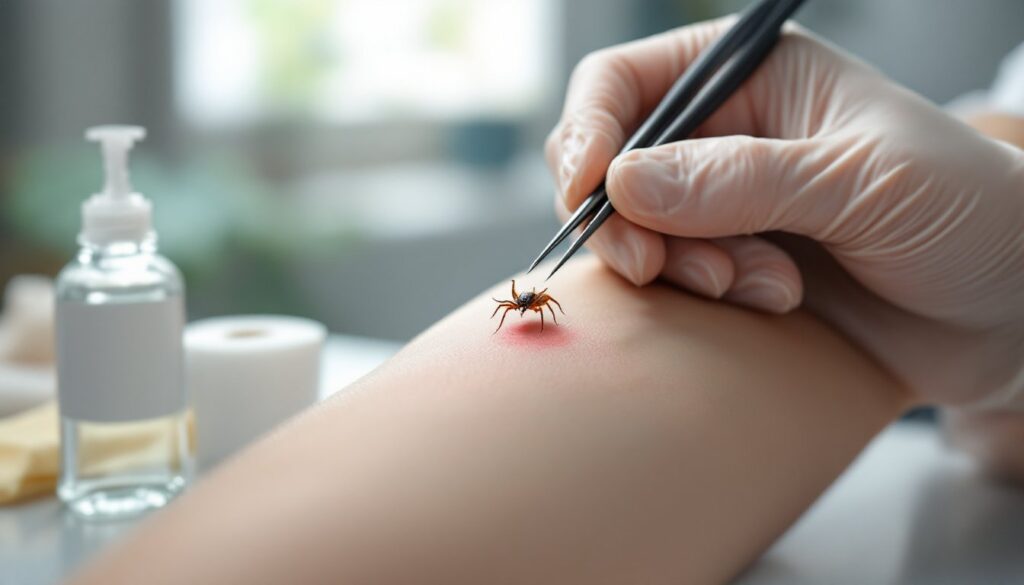
- Grasp the tick’s head with fine-tipped tweezers as close to the skin as possible. Don’t squeeze the body, this can force infected fluid into the bite.
- Pull straight out with steady, even pressure. The entire head and mouthparts must come free: any left behind can cause infection or re-attachment.
- Place the tick in a sealed container with rubbing alcohol to kill it. Save the container (some doctors ask to see it if symptoms develop).
- Clean the bite area with antiseptic wipe or soap and water.
- Wash your hands thoroughly.
What NOT to do: Don’t use nail polish, petroleum jelly, or heat (burning) to remove ticks. These old remedies don’t work and may cause the tick to regurgitate bacteria into the wound. Don’t crush the tick with bare fingers, wear gloves if you must handle it. Avoid twisting or jerking, which leaves mouthparts embedded.
If the tick’s head remains stuck in skin, or if the area becomes red, swollen, or hot (signs of infection), see a doctor. After removal, watch for flu-like symptoms, rash, or joint pain over the next 30 days, these warrant immediate medical attention and blood testing for Lyme disease.
Professional Pest Control Solutions When You Need Them
If DIY prevention and removal aren’t cutting it, especially if you find multiple ticks indoors or your yard is heavily infested, professional pest control is worth the investment. Licensed exterminators have access to stronger acaricides, safety equipment, and expertise that homeowners often lack.
Professional services typically include yard treatment with EPA-approved miticides, interior inspection and treatment if ticks are indoors, and follow-up visits. Costs vary by region and severity: tick treatment costs typically range from $200 to $600 for initial treatment plus follow-ups. Local pest control options can provide one-time treatments or ongoing quarterly plans, depending on your situation.
When hiring a professional, ask about:
- Chemicals used (EPA approval and safety for pets/children)
- Application method (spray, granule, or combination)
- Warranty or re-treatment guarantee
- Pre- and post-treatment instructions
Before treatment, remove toys, pet bowls, and outdoor furniture. Keep family and pets indoors during application and for the time specified on the service agreement.
Some homeowners combine professional yard treatment with regular DIY checks and mowing. This hybrid approach is often the most cost-effective, especially in high-tick regions like the Northeast and upper Midwest. If you’re unsure whether to go professional, start with yard maintenance and frequent checks: if tick encounters increase, call a licensed professional.